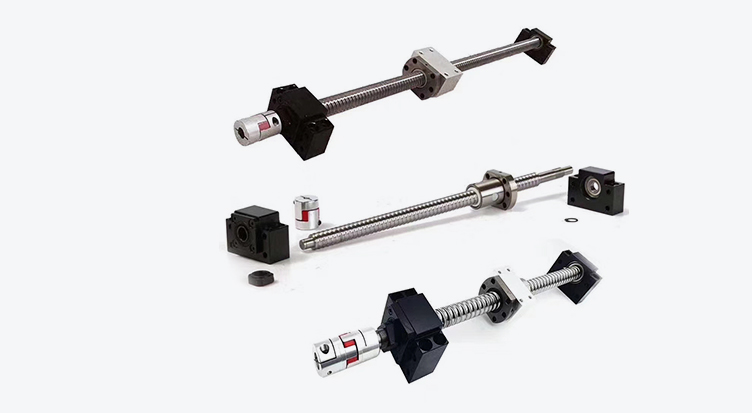
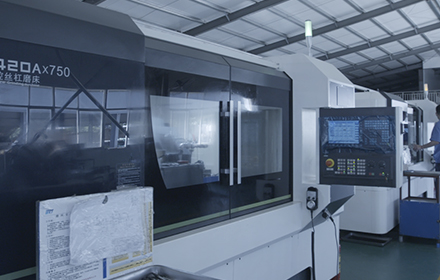
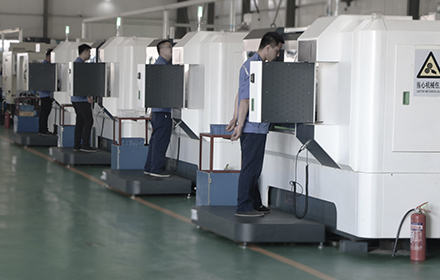
As an important transmission component, ball screws are widely used in the industrial field. Compared with other transmission components, ball screws have unique advantages, which enable them to be widely applied in many fields. This article will analyze and elaborate on the main application fields of ball screws, so as to better understand the function and significance of ball screws.
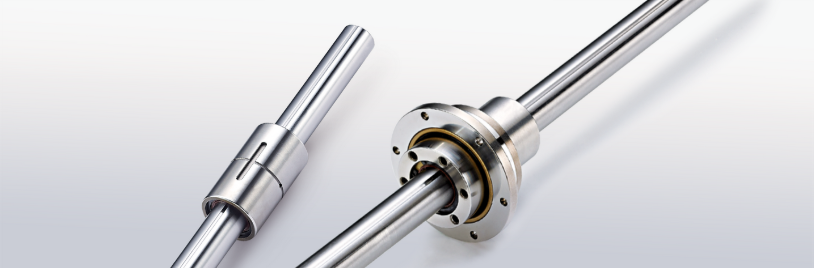
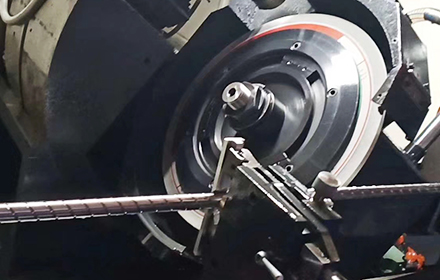
In machine tool manufacturingBall screws are often used to achieve precise positioning and motion control. Owing to their characteristics of high precision, high rigidity, and high efficiency, ball screws can realize accurate position control and smooth motion transmission on machine tools. This is crucial for the machining precision and production efficiency of machine tools. Ball screws can be found in various machine tools, whether they are CNC machines, lathes, or milling machines. They are capable of providing high-speed, high-load, and high-precision motion output, ensuring that machine tools achieve the expected accuracy and stability during the machining process.
In the field of automated equipmentBall screws are often used to achieve precise position adjustment and motion control. Automated equipment typically requires highly accurate positioning capabilities and stable motion performance, and ball screws are ideal for meeting these demands. For instance, in automated equipment such as robots, laser cutting machines, and semiconductor equipment, ball screws are often used to control the movement of robotic arms, ensuring their precise positioning and smooth motion trajectories. Additionally, ball screws can also be applied in equipment like automated conveyor lines and automatic assembly lines to realize the precise positioning and transportation of materials.
In the aerospace and defense industry fieldsThe requirements for transmission devices are extremely high, demanding high strength, high precision, and high reliability. Ball screws are widely used in these fields. In aerospace vehicles such as aircraft, missiles, and rockets, ball screws can be used to control the movement of components like airfoils and empennages, ensuring the stability and maneuverability of the aircraft. In defense equipment, ball screws can also be applied to weapon systems such as artillery and tanks to realize the rotation of turrets and the lifting of gun barrels. These applications place extremely high demands on the reliability and precision of ball screws, while also demonstrating their importance in critical fields.
In the field of precision instrumentsSuch as optical instruments, microscopes, and measuring instruments, ball screws are often used for precise position adjustment and motion control. Thanks to their characteristics of high rigidity and high precision, ball screws can accurately transmit and control tiny amounts of motion, making them highly suitable for these application scenarios that require a high level of accuracy. In some medical equipment, such as imaging devices and surgical robots, ball screws also play an important role. They can provide precise position adjustment, assisting medical staff in conducting accurate operations and diagnoses, and improving the functionality and effectiveness of medical equipment.
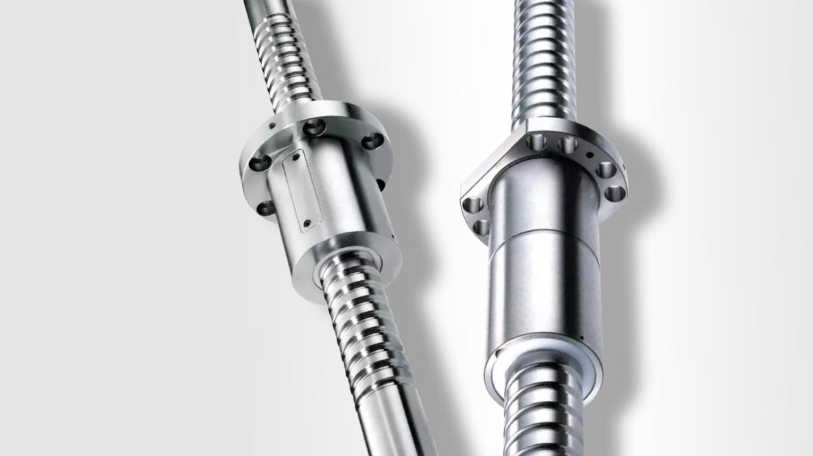
Compared with other transmission components, ball screws hold significant application value in key fields such as machine tool manufacturing, automated equipment, aerospace and defense industries, as well as precision instruments and medical equipment. With their characteristics of high precision, high rigidity, and high efficiency, ball screws provide reliable support for industrial production and scientific research in these fields. In the future, as technology continues to advance and application fields expand, it is believed that ball screws will play an important role in more areas and continue to bring convenience and progress to human work and life.
 English